
Finding a reliable shower head manufacturer China partner is not only about comparing unit prices. For overseas importers, wholesalers, brand owners, and project buyers, the real goal is to reduce supply risk while building a product line that can be repeated, improved, and delivered on time. A good factory should be able to show clear qualifications, stable production capacity, practical engineering support, strict quality control, efficient sampling, and realistic lead-time management.
China remains one of the world’s most important sourcing bases for bathroom and shower products because it combines mature supply chains, skilled metal and plastic processing, surface finishing, packaging, and export logistics. However, capability varies widely from one supplier to another. Two factories may both claim to manufacture shower heads, but one may only assemble purchased components while another controls mould development, injection, polishing, plating coordination, testing, packaging, and shipment follow-up. This guide explains how overseas buyers can evaluate manufacturers before placing an order.
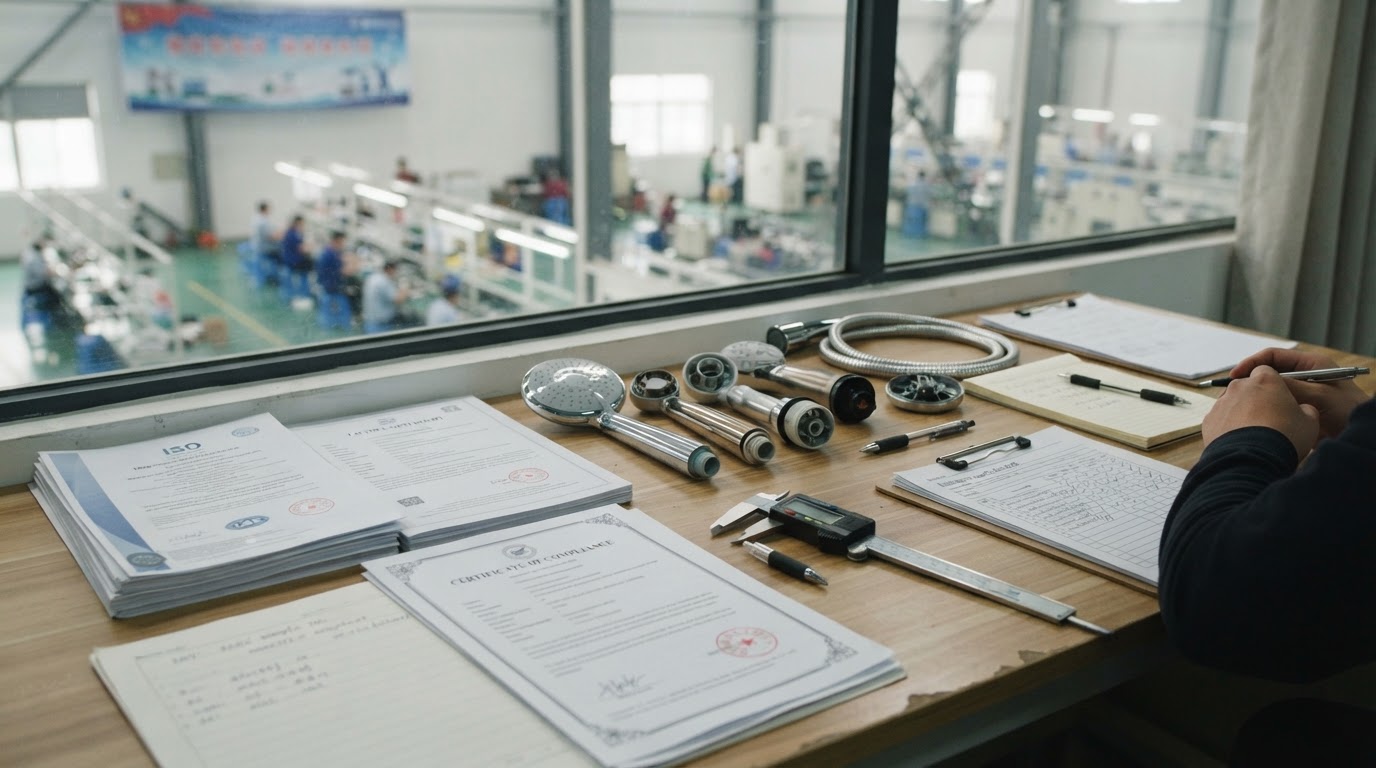
Start with Factory Qualifications, Not Price Alone
The first screening step is to confirm whether the supplier is a real factory, a trading company, or a hybrid business. A trading company can still be useful in some cases, but if you need OEM or ODM development, stable technical communication, and long-term product continuity, direct factory capability matters. Ask for the business license, export experience, production address, main product scope, and examples of previous shipment markets.
Business license and product scope
Check whether the registered business scope matches bathroom hardware, shower products, sanitary ware, plastic products, or metal fittings. The company name alone is not enough. A factory that truly produces shower heads should be able to explain its workshops, key machines, testing equipment, and production workflow. If every question is answered with only a catalogue and a price list, the supplier may not have enough control over production.
Certifications and compliance awareness
Different markets require different compliance documents. For example, some buyers may need water-efficiency data, material declarations, plating test reports, or product-specific certifications. Even when certification is not mandatory for your target market, a qualified factory should understand testing language, sample submission, material traceability, and documentation control. For general quality management background, buyers can review the ISO explanation of ISO 9001 quality management. This is a non-competitive reference and helps procurement teams understand the logic behind documented processes.
Evaluate Production Capacity and Real Manufacturing Control
A strong manufacturer should not only say how many pieces it can make each month. It should also explain what processes are done in-house, what is outsourced, and how each step is controlled. For shower heads, common processes include product design, mould development, plastic injection, machining of fittings, surface treatment, assembly, water testing, appearance inspection, packaging, and final shipment checks.
If your business needs a stable supply of rain shower heads, hand showers, shower rails, or complete systems, review the factory’s main category experience. For example, Bright Showers’ Rain Shower Head category can help buyers understand the type of product range and finish options that should be discussed during sourcing. You can also compare related product directions from the main Products page before narrowing down a specification.
Questions to ask about capacity
- What are the normal monthly output levels for your main shower head series?
- Which processes are completed in your own factory and which are handled by approved partners?
- How many assembly lines are available during peak season?
- What is the minimum order quantity for standard items and customized finishes?
- Can production be expanded if repeat orders grow?
Answers should be specific. A vague promise such as “no problem, we can do anything” is not as useful as a realistic explanation of capacity, bottlenecks, and lead times. Reliable factories are usually transparent about what they can do well and where extra time is required.
Inspect Quality Control from Incoming Materials to Final Packing
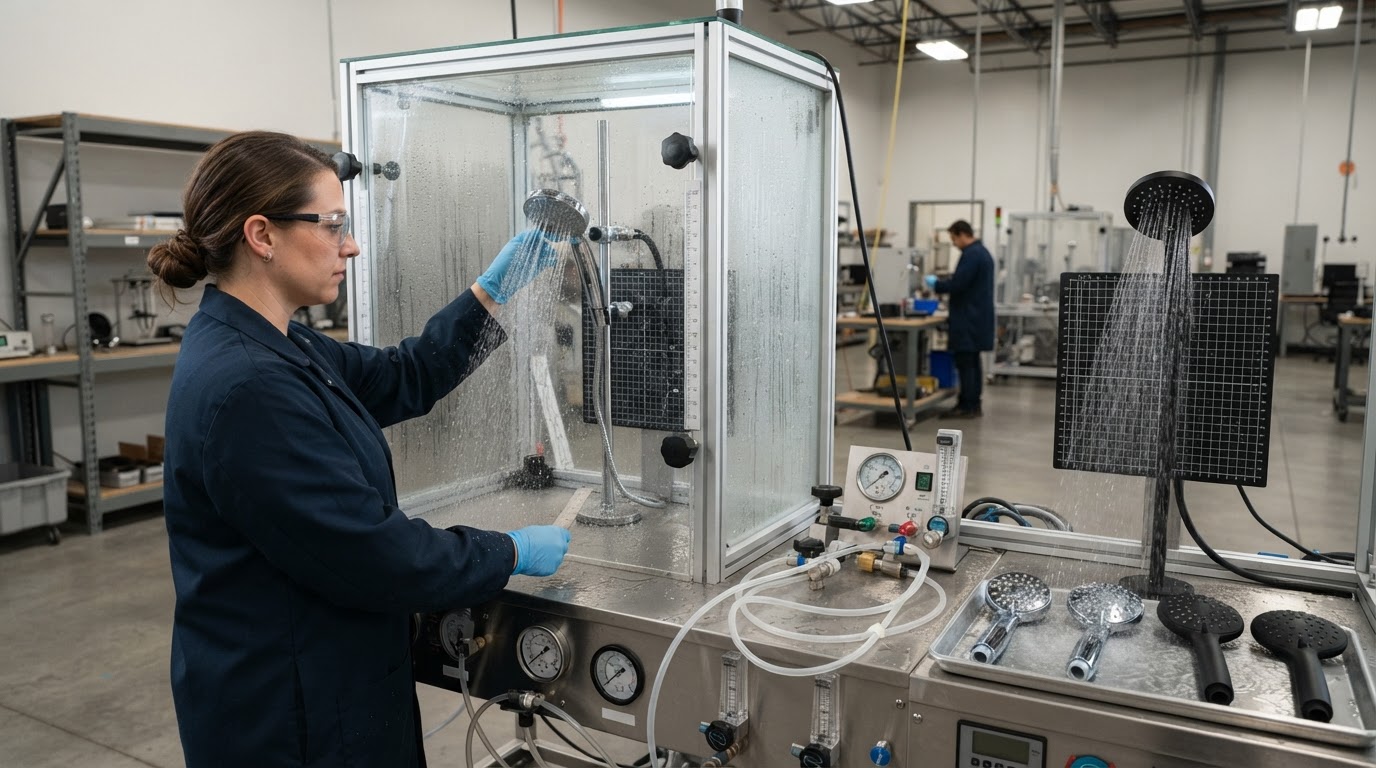
Quality control is one of the most important differences between a low-risk supplier and a risky one. A shower head may look simple, but problems can occur in many places: thread accuracy, leaking, unstable spray pattern, weak plating, rough edges, colour mismatch, clogged nozzles, poor packaging, or missing accessories. Buyers should ask the manufacturer to describe its inspection points in detail.
Important QC checkpoints
| QC stage | What buyers should verify | Why it matters |
|---|---|---|
| Incoming materials | Material grade, component dimensions, colour, and supplier consistency | Prevents hidden defects before assembly starts |
| In-process inspection | Thread fitting, surface finish, nozzle alignment, assembly torque | Finds problems before a full batch is completed |
| Water pressure testing | Leakage, spray pattern, flow stability, and functional switching | Confirms real product performance, not only appearance |
| Surface inspection | Scratches, plating defects, colour difference, fingerprints, and coating damage | Protects brand image and reduces customer complaints |
| Final packing check | Accessories, labels, cartons, manuals, barcode accuracy, and drop protection | Reduces shipment and retail problems after delivery |
A reliable supplier should welcome quality questions. It should be able to provide inspection photos, testing videos, or sample reports when required. If your order is large or quality requirements are strict, consider arranging third-party inspection before shipment. For a general overview of internationally used trade terms, the ICC’s Incoterms page is a useful reference, although you may choose to open it as a nofollow source here: Incoterms rules.
For buyers who want to understand how a bathroom products supplier presents its own quality process, see Bright Showers’ Quality Control page. It is a helpful internal reference when building your own supplier audit checklist.
Use Sampling to Test Communication, Engineering, and Finish Details
Sampling is not only about receiving one attractive product. It is a practical test of the manufacturer’s communication speed, technical understanding, packaging accuracy, and willingness to solve problems. Before requesting a sample, give the factory a clear specification sheet. Include product type, material preference, size, connection standard, flow requirement, finish, packaging style, logo requirement, and target market.
What a good sample process looks like
A professional manufacturer will confirm technical details before producing or sending samples. It may suggest an existing model if your requirement can be met faster, or it may explain tooling needs if the design is new. For standard shower head products, samples may be prepared quickly. For special colours, customized packaging, private labels, or new moulds, the timeline will be longer. The key is not always the shortest sample time; it is whether the factory explains the process clearly and keeps its promises.
When samples arrive, inspect them like a small production batch. Check the finish under natural and indoor light, test the thread connection, run water through the product, assess spray coverage, review packaging, and compare the sample with the quotation. If the factory handles corrections carefully at the sample stage, it is more likely to manage mass production responsibly.
Confirm Lead Time, Delivery Planning, and Export Support

Lead time is another major factor when choosing a shower head manufacturer in China. A supplier may offer an attractive price, but if it cannot ship consistently, your inventory plan and customer commitments may suffer. Ask for estimated lead time for samples, first bulk order, repeat order, and peak-season production. Also ask when the lead time begins: after deposit, after artwork confirmation, after sample approval, or after packaging confirmation.
Good manufacturers manage lead time through planning. They confirm materials early, reserve production slots, review packaging artwork before mass production, and provide updates before delays become serious. If your business has seasonal demand, share your forecast. A cooperative factory can often prepare components in advance or recommend a phased shipment plan.
Delivery documents and packing details
Overseas buyers should also check whether the supplier understands export documentation, carton markings, pallet requirements, product labels, and destination market expectations. Even a good product can create problems if cartons are weak, barcode labels are wrong, or accessories are missing. Ask for packing photos before shipment and keep an approved packing standard for repeat orders.
Compare Suppliers with a Practical Scorecard
Instead of choosing a manufacturer only by quotation, create a scorecard that compares each candidate in the same way. This makes decisions easier for sourcing, quality, and management teams. A simple scorecard can include factory qualification, product range, communication, engineering support, sampling accuracy, QC process, packaging control, lead time, and export experience.
Suggested supplier scoring items
- Factory credibility: license, address, years of experience, main markets, and audit readiness.
- Product match: whether the supplier has proven experience with your required shower head type, finish, and price level.
- Technical support: ability to read drawings, suggest improvements, and explain materials or standards.
- Quality system: inspection points, testing equipment, records, and corrective action process.
- Sampling performance: speed, accuracy, packaging, and response to revisions.
- Delivery reliability: realistic schedule, production updates, and shipment document support.
- Long-term fit: willingness to support private label, product upgrades, and repeat orders.
When you compare suppliers this way, the cheapest offer may not be the best option. A slightly higher unit cost can be worthwhile if the manufacturer reduces defects, avoids delays, protects your brand, and supports future development. For more purchasing background, you may also read Bright Showers’ blog article Rain Shower Head Guide, which explains product comfort, spray coverage, and buying considerations.
Red Flags When Selecting a Shower Head Manufacturer China Partner
Be careful if a supplier refuses to answer technical questions, cannot explain production processes, offers unrealistically low prices, changes specifications without notice, or promises impossible delivery dates. Other warning signs include inconsistent sample quality, poor packaging, unclear payment terms, and no willingness to document inspection results. Reliable manufacturers do not hide every detail; they help buyers understand risks and make informed decisions.
Also pay attention to communication style. A good factory does not only reply quickly; it replies accurately. It asks questions when your specification is unclear, confirms changes in writing, and keeps records of approved samples, labels, cartons, and finish requirements. This discipline is especially important for OEM and ODM orders where small details can affect the final product.
Conclusion: Choose a Manufacturer That Can Grow with Your Business
Choosing a reliable shower head manufacturer in China requires more than requesting a quotation. Overseas buyers should review factory qualifications, confirm production capacity, inspect quality control, use sampling as a practical test, and verify lead-time management before placing bulk orders. The best supplier is not simply the one with the lowest price, but the one that can deliver consistent products, solve problems quickly, and support your brand over multiple orders.
If you are developing a shower product line, prepare a clear specification sheet, compare suppliers with a scorecard, and ask for transparent evidence at every stage. This approach helps reduce sourcing risk and makes it easier to build a stable, long-term relationship with a manufacturer that understands quality, export expectations, and buyer priorities.