Before placing a large order, overseas buyers need more than a good catalogue photo and an attractive quotation. A shower head may look acceptable on the outside, but real performance depends on water pressure resistance, flow rate stability, leakage control, surface durability, corrosion resistance, lifespan, packaging strength, and batch consistency. That is why shower head quality testing should be part of every serious procurement process before bulk ordering.
For importers, wholesalers, private label brands, hotel project buyers, and online retailers, quality testing is not only a technical issue. It directly affects customer reviews, return rates, warranty cost, brand reputation, and repeat sales. A reliable supplier should be able to explain how products are tested, what standards are applied, how inspection records are kept, and how nonconforming goods are handled. This guide explains the most common shower head testing items and provides a practical purchasing inspection checklist for bulk orders.
Why Shower Head Quality Testing Matters Before Bulk Ordering
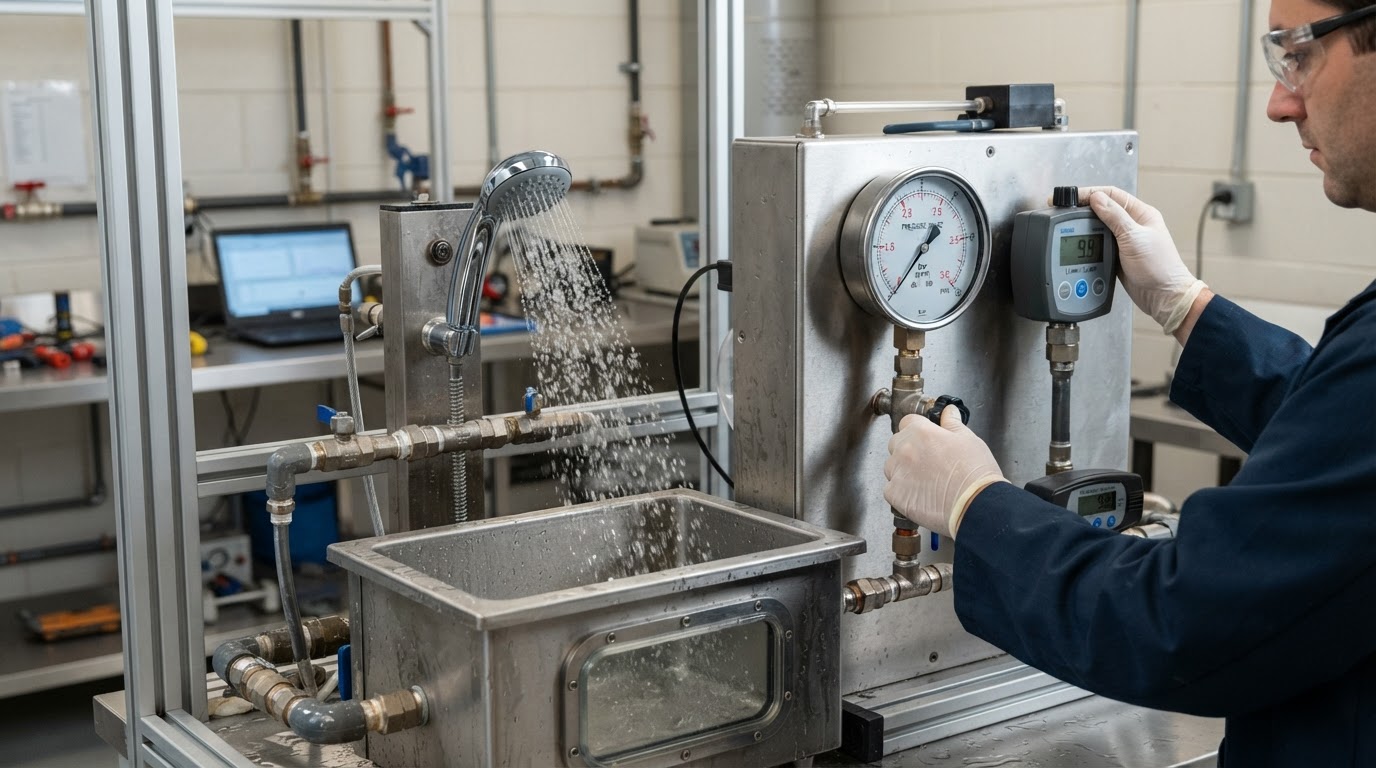
Bulk orders magnify every quality problem. If one sample leaks, a buyer can reject it easily. If a container shipment has a 5% leakage rate, the financial loss can be serious. Product returns, repacking, replacement parts, bad reviews, and delayed sales can cost more than the original quality control investment. Testing before mass production and before shipment helps buyers find problems early, when correction is still possible.
Testing is also important because shower products operate under real water pressure, frequent handling, changing temperatures, cleaning chemicals, and humid bathroom conditions. Appearance alone cannot prove that the product will work well after months of use. A complete quality evaluation should include function, safety, durability, surface finish, packaging, and documentation. Bright Showers’ Quality Control page is a useful internal reference for understanding how shower product inspection should be discussed with a supplier.
Testing protects both buyer and manufacturer
A good quality testing process protects the buyer from receiving defective goods, but it also protects the manufacturer from unclear complaints. When test requirements, acceptable limits, approved samples, and inspection methods are documented, both sides know what quality level is expected. This reduces disputes and supports long-term cooperation.
Core Shower Head Quality Testing Items
The exact test plan depends on product type, target market, material, finish, and buyer requirements. However, most shower head sourcing projects should review water pressure, flow rate, leakage, spray performance, surface finish, salt spray resistance, lifespan, thread accuracy, packaging, and final inspection. The table below summarizes common testing items for procurement teams.
| Test item | What it checks | Why it matters for buyers |
|---|---|---|
| Water pressure test | Resistance to working and higher pressure conditions | Prevents bursting, deformation, or leakage under normal use |
| Flow rate test | Water output at defined pressure | Confirms user comfort and market compliance expectations |
| Leakage test | Seals, joints, threads, switches, and connectors | Reduces warranty claims and customer complaints |
| Spray pattern test | Coverage, consistency, mode switching, and nozzle performance | Ensures the product feels good in daily use |
| Salt spray test | Corrosion resistance of plated or coated surfaces | Protects appearance in humid bathroom environments |
| Lifespan test | Repeated switching, water cycling, or endurance operation | Verifies durability for repeat use |
| Packaging test | Box strength, protection, labels, and accessory placement | Prevents shipping damage and warehouse problems |
Water Pressure Testing
Water pressure testing checks whether the shower head can handle normal and higher-than-normal pressure without leaking, cracking, separating, or deforming. This is especially important for products with multiple spray functions, thin rain shower bodies, plastic internal waterways, threaded connections, or assembled parts. A shower head that works at low pressure may still fail when used in markets where household water pressure is higher.
Buyers should ask the supplier what pressure level is used during testing, how long the test lasts, and whether 100% of goods or only random samples are tested. For high-risk or premium orders, it may be reasonable to require more frequent testing or additional pressure checks during production. The factory should also inspect after testing to confirm that no small leakage, body swelling, loose joint, or abnormal sound appears.
Buyer questions for pressure testing
- What pressure level is used for routine testing?
- Is every unit pressure tested or only sample units?
- How long does each pressure test last?
- What is the rejection standard for leakage or deformation?
- Are pressure test records or videos available for large orders?
Flow Rate and Spray Performance Testing
Flow rate testing measures how much water passes through the shower head under a defined pressure. This matters for comfort, water-saving claims, local market expectations, and product consistency. A flow rate that is too high may waste water or fail local requirements. A flow rate that is too low may create customer complaints about weak performance. Buyers should decide whether they need a standard flow rate, a water-saving version, or a market-specific configuration.
Spray performance testing is closely related. A good shower head should provide stable spray coverage, balanced nozzle output, smooth mode switching, and acceptable water distribution. For multi-function hand showers, each mode should be tested. For rain shower heads, coverage should be even, without obvious dead zones or uncontrolled splashing. Buyers can review the Rain Shower Head category to compare common designs where spray coverage and flow feel are major selling points.
For a general technical background on water measurement, the U.S. National Institute of Standards and Technology provides non-competitive information about measurement and standards at NIST. For actual purchasing decisions, buyers should still rely on supplier test data, approved samples, and shipment inspection.
Leakage Testing for Seals, Threads, and Switching Parts
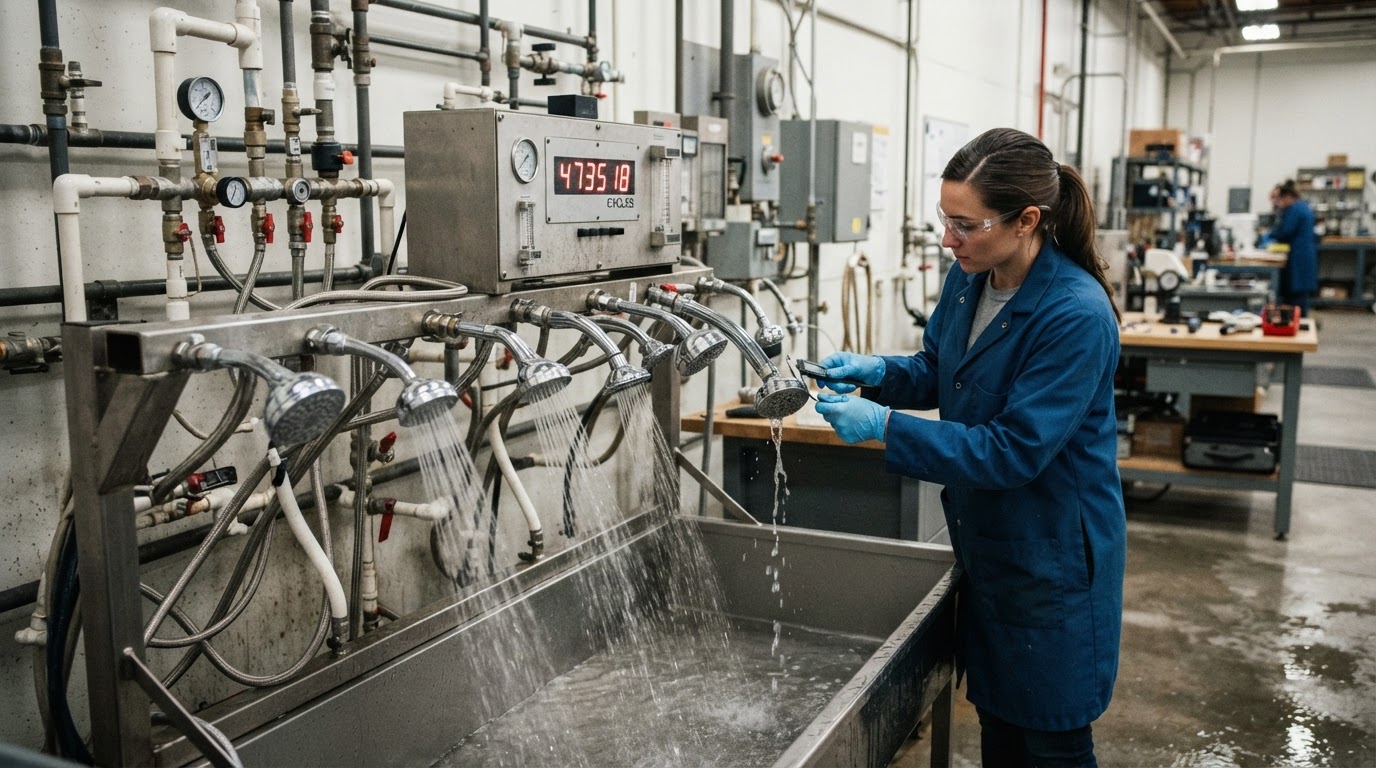
Leakage is one of the most common and costly quality issues in shower head bulk orders. Leaks may occur at threaded connections, spray face joints, internal seals, button switches, rotating parts, or hose connection points. Even a small leak can create negative reviews, especially in online retail channels where customers expect quick installation and trouble-free use.
A complete leakage test should check the product under working pressure and after assembly. If the shower head has several functions, leakage should be reviewed in each mode. If the product includes a swivel joint or adjustable angle, that area should also be tested. For shower sets, buyers should also inspect hoses, holders, diverters, and related fittings. The Hand Shower category is a practical internal reference for products where seals, switches, and handheld use affect long-term performance.
Common leakage causes
- Incorrect sealing ring size or material.
- Weak assembly torque or inconsistent tightening.
- Poor thread accuracy or damaged thread surface.
- Unstable plastic welding or body assembly.
- Improper internal waterway design.
- Surface coating buildup around connection areas.
Salt Spray and Corrosion Resistance Testing
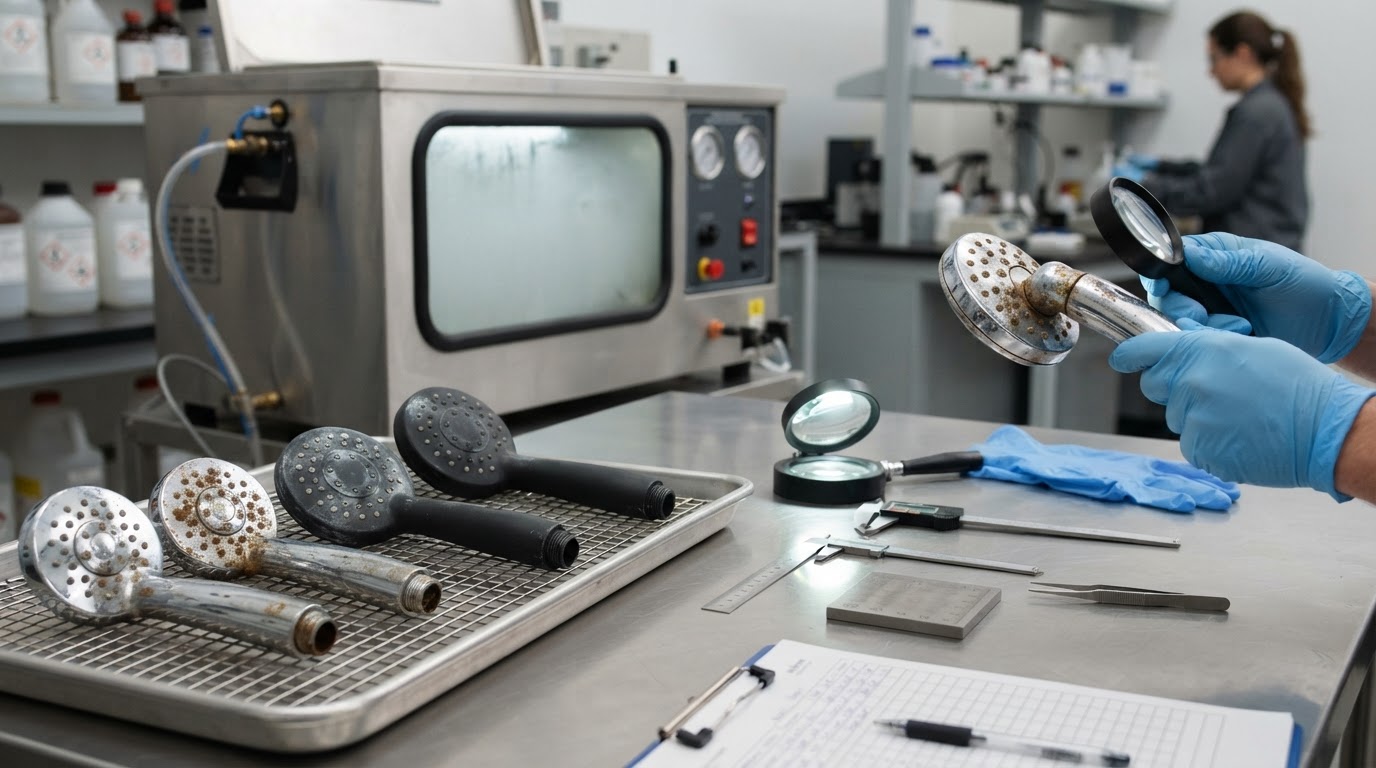
Salt spray testing is commonly used to evaluate the corrosion resistance of plated, coated, or metal bathroom products. It is especially important for chrome, matte black, brushed nickel, gold, stainless steel, and other visible finishes. Bathrooms are humid environments, and some markets also have hard water, coastal air, or aggressive cleaning habits. A finish that looks beautiful at first may lose value quickly if corrosion resistance is poor.
Buyers should ask the factory what salt spray test duration is normally used for each finish. Different price levels and markets may require different testing expectations. A budget ABS shower head and a premium stainless steel rain shower head may not use the same test requirement. For a general background reference, buyers may read about the salt spray test, but actual acceptance standards should be confirmed with the manufacturer and, when necessary, third-party laboratories.
Surface inspection after corrosion testing
After corrosion testing, inspectors should check for rust, blistering, peeling, discoloration, white spots, black spots, surface cracks, and adhesion loss. Buyers should define what is acceptable before testing. Without a clear acceptance standard, one supplier may consider small spots acceptable while the buyer may see them as a failure.
Lifespan and Endurance Testing
Lifespan testing evaluates whether a shower head can withstand repeated use. For hand showers with multiple spray functions, the switching mechanism should be tested repeatedly. For rain shower heads, water cycling and seal stability may be more important. For adjustable parts, rotation and angle adjustment should be checked. The goal is to find weak points before thousands of products reach customers.
Endurance testing should reflect the product’s real use. If customers will switch spray modes frequently, the switch should be tested many times. If the shower head is designed for hotels or rental properties, durability expectations may be higher than for a low-cost promotional item. The testing plan should match the market promise. Buyers developing private label products can also read OEM Shower Head Manufacturer Guide for a broader view of design, tooling, finish, logo, packaging, and delivery control.
Pre-Shipment Inspection Checklist for Buyers
Before paying the balance or arranging shipment, buyers should complete a pre-shipment inspection. This can be done by the buyer, the supplier’s QC team, or a third-party inspection company. The checklist should match the approved sample and purchase order. If the order is a repeat order, compare it with the previous approved sample and packaging standard.
Bulk order inspection checklist
- Product appearance: finish, colour, scratches, dents, burrs, stains, and visible defects.
- Dimensions: size, thread connection, spray face diameter, and accessory fit.
- Function: spray modes, switching, water output, flow rate, and user feel.
- Leakage: seals, joints, threads, connectors, and assembled parts.
- Surface durability: plating, coating, adhesion, corrosion resistance, and cleaning marks.
- Logo and branding: logo position, size, colour, durability, and consistency.
- Packaging: box print, barcode, manual, accessories, carton marks, and protection.
- Quantity: pieces per carton, total cartons, carton weight, and shipping marks.
- Documentation: packing list, inspection report, test records, and required certificates.
How to Work with Suppliers on Quality Requirements
The best time to discuss quality is before placing the order, not after defects are found. Buyers should include key testing requirements in the purchase agreement or product specification sheet. This may include pressure test level, flow rate range, salt spray duration, accepted finish sample, packaging standard, and inspection method. Clear written requirements help the factory quote accurately and produce consistently.
It is also important to understand that higher quality requirements can affect cost and lead time. More testing, better materials, stricter finish control, and stronger packaging may increase the unit price, but they can reduce complaints and protect the buyer’s brand. For buyers still comparing suppliers, the published guide Rain Shower Head Guide provides additional product selection context related to comfort, coverage, and purchasing decisions.
Conclusion: Test First, Then Scale the Order
Shower head quality testing is essential before bulk ordering because it helps buyers verify performance, durability, and consistency before products reach the market. Water pressure testing, flow rate testing, leakage testing, salt spray testing, lifespan testing, surface inspection, and packaging checks all play important roles in reducing risk. A product that passes these checks is more likely to satisfy end users and support repeat sales.
For the best results, prepare a clear specification sheet, approve physical samples, define acceptance standards, and confirm the inspection checklist before mass production. Work with a manufacturer that can provide transparent testing information, practical quality control, and reliable delivery support. Testing first and scaling later is the safest way to protect your bulk order, your customers, and your brand reputation.