For wholesalers, importers, retailers, hotel project buyers, and private-label bathroom brands, the choice between ABS and stainless steel shower heads directly affects cost, product positioning, shipping weight, durability, surface finish, and after-sales risk. The keyword question is simple: ABS vs stainless steel shower head, which material is better for wholesale? The practical answer depends on your target market, price level, product design, finish requirement, and expected service life.
ABS shower heads are widely used because they are lightweight, cost-efficient, easy to mould into different shapes, and suitable for chrome, matte black, white, and other decorative finishes. Stainless steel shower heads are often selected for a more solid feel, strong corrosion resistance, and a higher-end material story. Both materials can perform well when manufactured correctly, but they serve different wholesale strategies. This guide compares material cost, weight, corrosion resistance, surface treatment, production flexibility, and bulk purchasing scenarios so buyers can choose the right product mix.
What Is an ABS Shower Head?
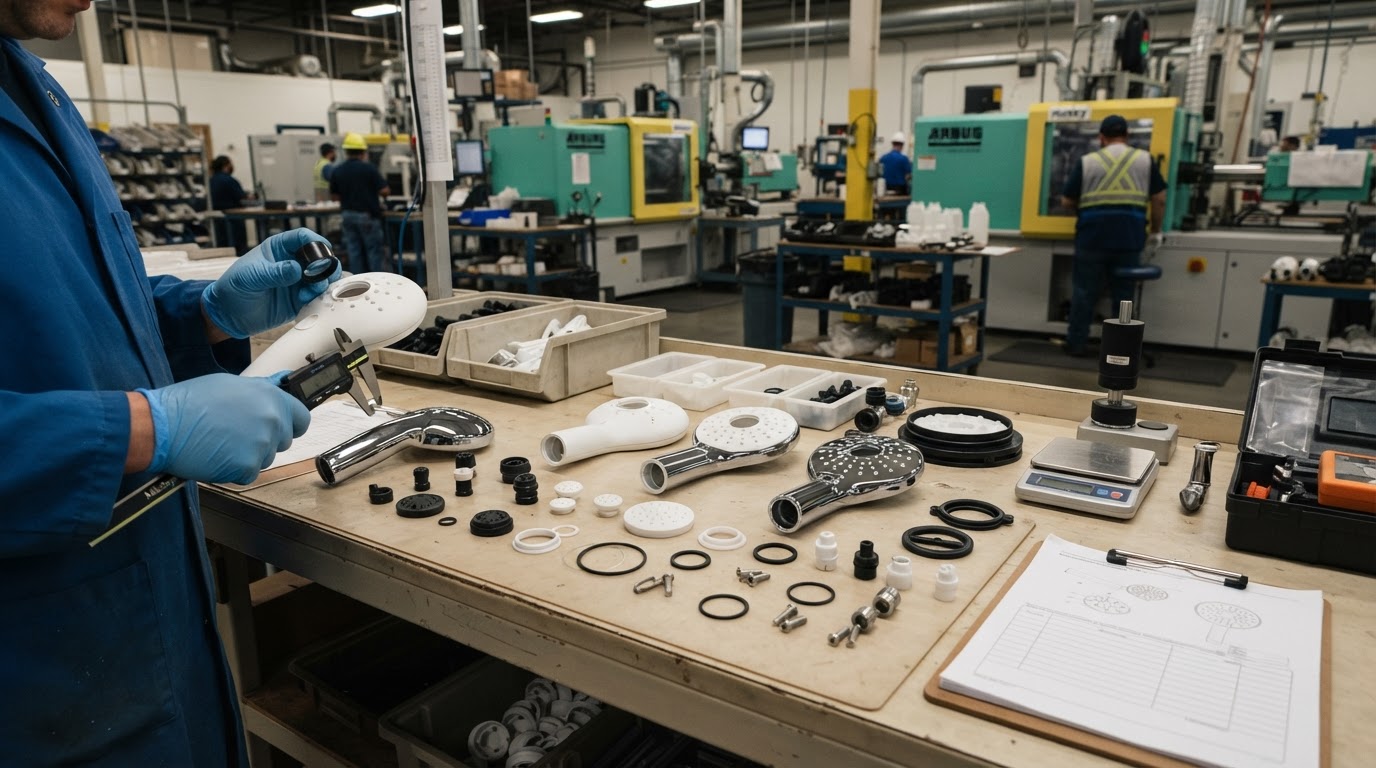
ABS stands for acrylonitrile butadiene styrene, a common engineering plastic used in many consumer and bathroom products. In shower head manufacturing, ABS is valued because it can be injection moulded into complex designs with consistent dimensions. This is important for wholesale buyers who need stable output, repeatable appearance, and competitive pricing across large quantities.
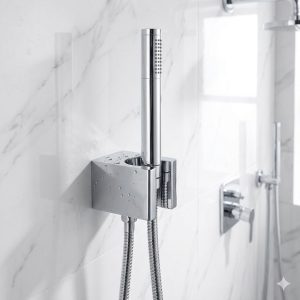
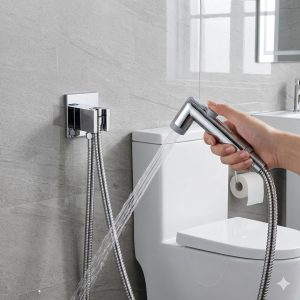
An ABS shower head is not automatically low quality. Quality depends on the plastic grade, mould precision, wall thickness, internal structure, plating or coating process, nozzle material, assembly control, and leakage testing. A well-made ABS shower head can be suitable for mass retail, online sales, promotional programs, rental housing, and price-sensitive bathroom product lines. For buyers reviewing product styles, the Hand Shower category is a useful place to compare different shapes, functions, and wholesale design directions.
Key advantages of ABS
- Lower unit cost: ABS is usually more economical than stainless steel for high-volume production.
- Lightweight structure: Lower weight can reduce freight cost and improve consumer handling comfort.
- Design flexibility: Injection moulding supports curved shapes, multi-function structures, and decorative details.
- Finish variety: ABS can support chrome-look finishes, matte colours, white, black, and other market-oriented designs.
- Fast mass production: Once moulds are ready, large batches can be produced efficiently.
What Is a Stainless Steel Shower Head?
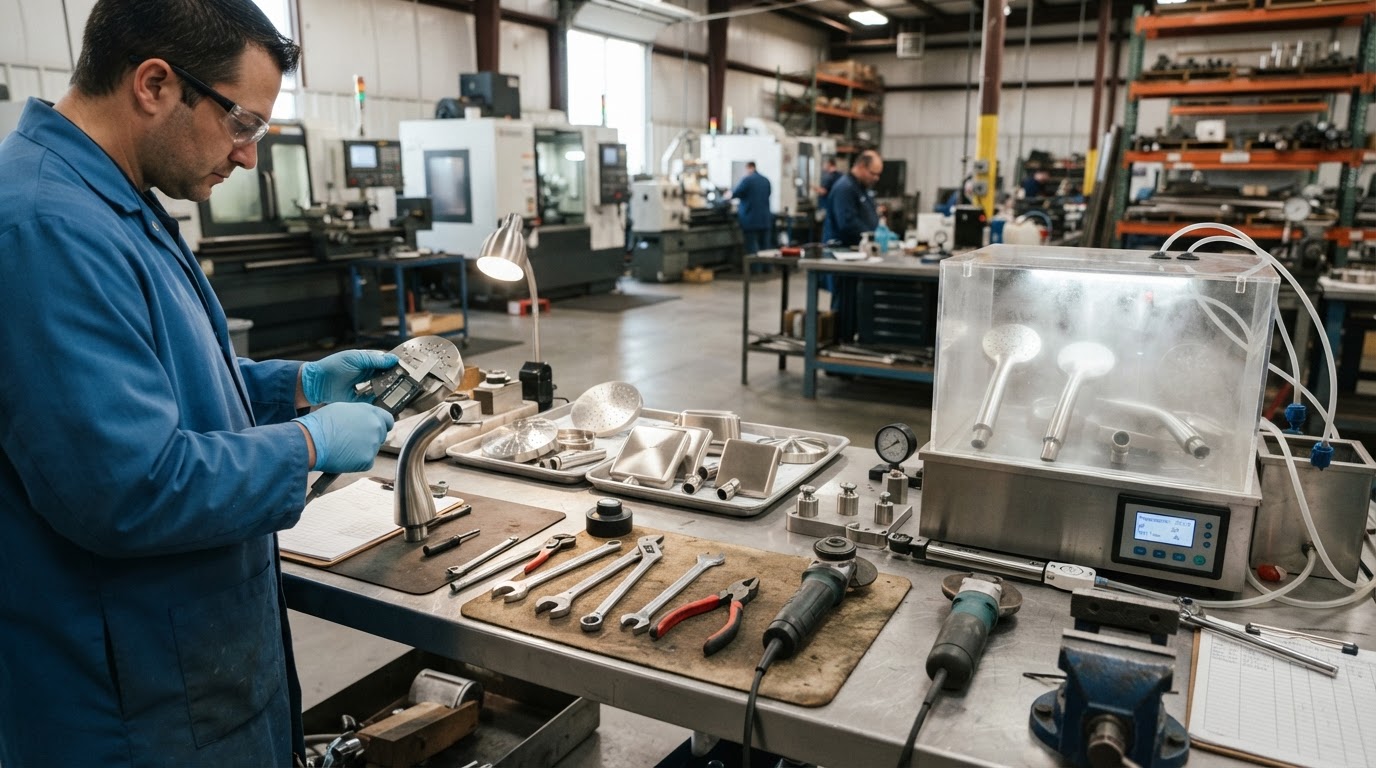
Stainless steel shower heads use stainless steel as the main body material. They are commonly selected when buyers want a stronger material impression, a modern minimalist look, and better resistance to rust in wet environments. Stainless steel is especially popular for rain shower heads, slim square shower heads, brushed metal styles, and products positioned as premium or project-grade.
For general background on stainless steel as a material, buyers can review the explanation from World Stainless. This is not a competing shower head supplier; it is a material information source. In real wholesale purchasing, however, buyers should still confirm the stainless steel grade, thickness, welding quality, surface finish, waterway design, and testing process with the manufacturer.
Key advantages of stainless steel
- Premium material feel: Stainless steel often gives buyers and end users a stronger perception of durability.
- Good corrosion resistance: Properly selected stainless steel performs well in humid bathroom environments.
- Modern appearance: Brushed and polished stainless finishes suit contemporary bathrooms and hospitality projects.
- Stable structure: The material can provide a firm body for slim rain shower head designs.
- Higher product positioning: Stainless steel can support mid-range and premium wholesale programs.
ABS vs Stainless Steel Shower Head: Quick Wholesale Comparison
The following table gives a practical sourcing comparison. It does not mean one material is always better than the other. Instead, it helps wholesale buyers match each material with the correct sales channel and product promise.
| Factor | ABS shower head | Stainless steel shower head | Wholesale decision tip |
|---|---|---|---|
| Material cost | Usually lower and suitable for price-sensitive programs | Usually higher due to metal material and processing | Use ABS for entry-level and mass retail; use stainless steel for premium ranges |
| Weight | Lightweight, easier to ship in large quantities | Heavier, gives a more solid hand feel | Consider freight cost and customer expectations |
| Corrosion resistance | Depends heavily on coating and component quality | Strong when the correct grade and finish are used | Use stainless steel for humid, coastal, or project-grade positioning |
| Surface process | Chrome plating, painting, PVD-style finishes, matte colours | Brushed, polished, electroplated, or coated finishes | Confirm finish testing before bulk order |
| Design flexibility | High flexibility for complex shapes and multi-function designs | Better for simple, slim, modern forms | Match material to design complexity |
| Best use case | Retail, e-commerce, promotional sets, budget renovation | Hotels, premium retail, modern rain shower programs | Build a mixed product line for different buyers |
Material Cost: Which Is Better for Price Control?
For many wholesale buyers, cost is the first reason to compare ABS and stainless steel. ABS generally offers stronger price control because raw material and processing costs are lower. Injection moulding allows efficient production once the mould is ready, and the lightweight structure can also reduce packing and shipping pressure. This makes ABS attractive for supermarkets, online sellers, importers building wide SKU coverage, and buyers who need competitive opening price points.
Stainless steel usually costs more because the material, cutting, forming, welding, polishing, and finishing processes require more investment. However, wholesale price should not be judged only by unit cost. If a stainless steel shower head supports a higher retail price, better brand image, or lower complaint rate in a premium channel, it may deliver better overall value. The right choice depends on the margin structure of your market.
Procurement tip
Ask the supplier to quote ABS and stainless steel models with similar size, function, finish, packaging, and order quantity. If the specifications are not comparable, the price comparison will be misleading. Buyers should also request a breakdown of packaging, accessories, surface finish, and testing requirements because these items can change the final cost significantly.
Weight and Logistics: Why ABS Often Wins in Bulk Shipping
Weight is a major factor in wholesale purchasing. ABS shower heads are lighter, which can reduce carton weight and improve handling efficiency. For e-commerce sellers, lighter products can also reduce last-mile shipping costs and make returns easier to manage. If your wholesale business sells large volumes of hand showers or multi-piece kits, weight savings can become a real advantage.
Stainless steel is heavier, but that is not always negative. In premium retail, weight can create a perception of strength and value. A customer holding a stainless steel rain shower head may immediately feel that the product belongs to a higher category. For project buyers, the solid structure can also support the image of a durable installation. Therefore, the question is not simply whether lighter is better; it is whether the product weight matches the buyer’s sales channel.
Corrosion Resistance and Bathroom Durability
Bathrooms are wet environments, so corrosion resistance matters. Stainless steel is often chosen because it is known for corrosion resistance, especially when the correct grade and surface treatment are used. It is a strong option for humid climates, coastal markets, hotel bathrooms, and product lines where durability is a key selling point.
ABS does not rust like metal, but the surface finish, internal fittings, screws, and connectors still matter. A chrome-look ABS shower head may fail visually if the coating is weak or if surface treatment is not controlled well. For ABS products, buyers should focus on plating adhesion, coating thickness, colour stability, nozzle quality, and leakage testing. If your target market has hard water or high humidity, ask for more strict testing and sample evaluation.
For a broader understanding of ABS as a material, buyers may review this general reference on acrylonitrile butadiene styrene. In actual sourcing, always depend on your supplier’s material data, sample testing, and batch inspection rather than a general material description alone.
Surface Finish: Chrome, Matte Black, Brushed Metal, and More
Surface finish is where both materials can succeed or fail. ABS is commonly used for chrome, white, black, and decorative colour finishes. It is a good material when the product design requires a fashionable appearance at a competitive wholesale price. However, plating and coating quality must be controlled carefully. Poor finishing can lead to peeling, colour difference, scratches, or customer complaints.
Stainless steel supports polished, brushed, and coated finishes that fit modern bathrooms. A brushed stainless steel shower head can communicate a clean, architectural style, while polished stainless steel can match chrome bathroom hardware. Buyers should confirm whether the finish is natural stainless steel, electroplated, painted, or PVD-style coating, because each process affects cost, appearance, and durability.
Finish approval checklist
- Approve a physical colour and finish sample before mass production.
- Check samples under both natural light and indoor lighting.
- Confirm scratch resistance and cleaning requirements.
- Ask whether accessories match the same finish.
- Keep an approved sample for repeat order comparison.
Which Material Is Better for Different Wholesale Scenarios?
There is no single answer for every market. ABS is usually better when the buyer needs high-volume supply, flexible design, lower weight, broad colour options, and aggressive pricing. Stainless steel is usually better when the buyer wants premium positioning, stronger material value, better corrosion resistance, and a modern minimalist appearance.
Choose ABS when…
- You sell through supermarkets, discount retail, or fast-moving e-commerce channels.
- You need a large number of SKUs at competitive prices.
- Your market prefers lightweight hand showers or multi-function designs.
- You need custom colours, private-label packaging, or promotional sets.
- Freight cost is a major concern for your business model.
Choose stainless steel when…
- You are building a premium or project-grade product line.
- Your customers care strongly about material durability and corrosion resistance.
- You sell rain shower heads or slim modern bathroom designs.
- You supply hotels, apartments, or renovation projects.
- Your retail price can support higher material and processing costs.
Many successful wholesalers use both materials in one product strategy. ABS products help cover entry and mid-level price points, while stainless steel products support premium lines. Buyers can compare options in the Rain Shower Head category and then review related procurement advice in the published article Rain Shower Head Guide.
Quality Control Questions Before Placing a Bulk Order
Whether you choose ABS or stainless steel, quality control should be confirmed before mass production. Ask the manufacturer how it tests leakage, water pressure, spray pattern, surface finish, thread accuracy, packaging strength, and accessory completeness. For private-label orders, also check logo position, barcode labels, instruction manuals, and carton markings.
A reliable factory should provide sample photos, inspection records, or testing videos when needed. Buyers can use Bright Showers’ Quality Control page as an internal reference for the type of process information that should be discussed with a shower product supplier. If you are still choosing a supplier, the article How to Choose a Shower Head Manufacturer in China also explains how to evaluate factory qualifications, production ability, sampling, and lead time.
Final Recommendation: Build the Right Mix, Not Just One Material
In the ABS vs stainless steel shower head debate, ABS is usually the better choice for cost control, lightweight shipping, design flexibility, and mass-market wholesale. Stainless steel is usually the better choice for premium positioning, stronger material perception, corrosion resistance, and modern rain shower head programs. The best decision depends on your target customers, retail price, required finish, and acceptable quality level.
For most wholesale buyers, the smartest strategy is not to choose only one material. Build a balanced product range: ABS shower heads for competitive price points and broad style coverage, stainless steel shower heads for higher-end customers and project opportunities. Then confirm samples, finishes, packaging, and test standards before placing bulk orders. This approach gives your business more flexibility, reduces sourcing risk, and helps you serve different market segments with the right product at the right price.